
Top Rated Sleeping Pills UK: A Comparison Guide
People searching for top-rated sleeping pills often want to know which treatments are effective, reliable, and safe for improving sleep.
However, the most highly reviewed sleeping tablet is not necessarily the most appropriate medicine for a particular person. Online customer ratings may reflect individual experiences, while clinical evidence examines outcomes such as sleep onset, nighttime waking, daytime functioning, and adverse effects.
In the UK, sleep treatments range from pharmacy sleep aids and herbal preparations to prescription medicines for specific forms of insomnia.
This guide explains how to compare sleeping tablets, what the evidence suggests, and why safety matters as much as effectiveness.
For a broader introduction, explore our Sleep Aid Tablets UK guide or visit Affordable Tablets UK.

What Does “Top Rated Sleeping Pills” Mean?
A top-rated sleeping pill might refer to a product receiving favourable consumer reviews, a medicine supported by clinical research, or a treatment recommended by a healthcare professional.
These are different measures.
Consumer ratings can provide information about individual experiences, but they cannot establish that a medicine is safe or effective for everyone.
A clinically useful comparison should consider:
- Evidence that the treatment improves relevant sleep outcomes
- The type of insomnia being treated
- Short-term and long-term effectiveness
- Side effects and medicine interactions
- Dependence and withdrawal risks
- UK prescribing and regulatory requirements
- The patient’s age and medical history
There is no single sleeping tablet that ranks highest across every measure.
Comparing Common Sleeping Pills in the UK
The following table compares important categories of sleep aids. It is not a customer-rating leaderboard or a recommendation to use a particular medicine.
| Treatment | UK availability | Main consideration |
| Diphenhydramine | Certain pharmacy products | Temporary sleep difficulties; daytime drowsiness |
| Valerian preparations | Certain herbal products | Traditional use; inconsistent clinical evidence |
| Zopiclone | Prescription only | Short-term insomnia treatment; dependence risk |
| Zolpidem | Prescription only | Short-term severe insomnia treatment; dependence risk |
| Melatonin | Prescription only | Sleep–wake regulation; selected clinical indications |
| Daridorexant | Prescription only | Treatment option for eligible adults with chronic insomnia |
Different treatments have different indications and mechanisms. They should not be considered interchangeable.
1. Diphenhydramine: Pharmacy Sleep Aid
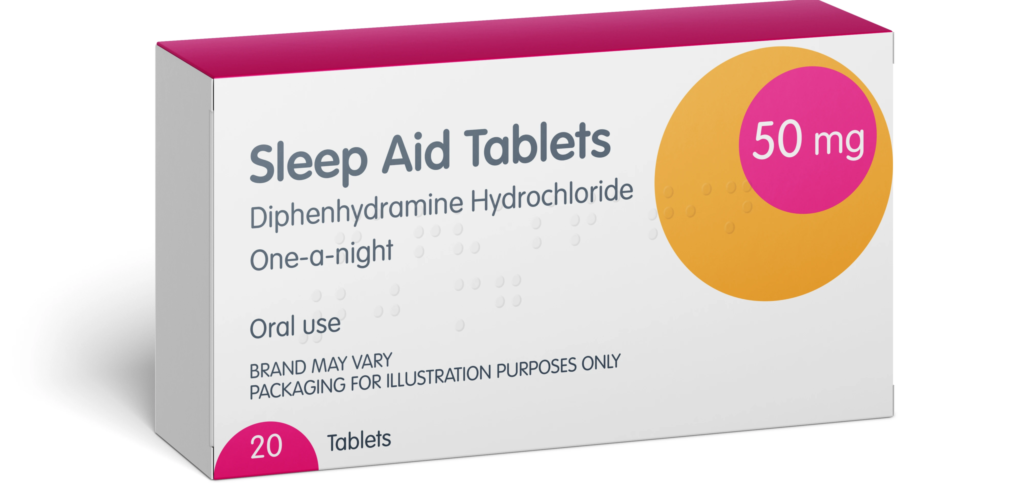
Diphenhydramine is a sedating antihistamine found in certain UK pharmacy sleep products.
It can temporarily help some adults experiencing occasional sleeping difficulties.
However, diphenhydramine may cause dry mouth, dizziness, and next-day drowsiness. Its effectiveness can also diminish with repeated use.
It is not intended as a long-term solution for chronic insomnia.
For more information, consult the NHS diphenhydramine guide.
2. Valerian: A Traditional Herbal Option
Valerian root is frequently included in herbal products marketed for relaxation and sleep support.
Certain valerian preparations are registered as traditional herbal medicines for specified uses.
However, research into valerian for insomnia has produced inconsistent results.
Traditional use does not mean a product has demonstrated the same level of effectiveness as a licensed prescription hypnotic.
Herbal products can also interact with medicines and cause adverse effects.
3. Zopiclone: Prescription Insomnia Treatment
Zopiclone belongs to a group of hypnotic medicines commonly called Z-drugs.
It is prescribed for short-term treatment of insomnia when clinically appropriate.
Zopiclone affects GABA-related activity in the brain, producing sedative effects.
Potential side effects include a bitter taste, dry mouth, dizziness, memory difficulties, and daytime sleepiness.
Tolerance and dependence can develop, which is why treatment is generally limited to a short period.
Read the NHS zopiclone guide for further information.
4. Zolpidem: Short-Term Treatment for Severe Insomnia
Zolpidem is another prescription-only Z-drug used for short-term treatment of severe insomnia.
It can help some patients fall asleep more quickly and reduce nighttime waking.
However, it may cause dizziness, impaired concentration, daytime drowsiness, and unusual sleep-related behaviours.
Zolpidem also carries dependence and withdrawal risks.
It should not be combined with alcohol or other sedating medicines without appropriate medical assessment.
See the NHS zolpidem information.
5. Melatonin: Supporting Sleep–Wake Regulation
Melatonin is a hormone involved in regulating the body’s sleep–wake cycle.
Prescription melatonin may be used for particular sleep problems, depending on the patient’s age, circumstances, and clinical indication.
It works differently from conventional hypnotics such as zopiclone and zolpidem.
Melatonin is prescription-only in the UK, even though it may be sold as a supplement in other countries.
Learn more from the NHS melatonin guide.
6. Daridorexant: A Different Approach to Insomnia
Daridorexant belongs to a medicine class known as dual orexin receptor antagonists.
Rather than enhancing GABA-related sedation, it blocks the action of orexin, a signalling system involved in wakefulness.
NICE recommends daridorexant as an option for eligible adults with long-term insomnia when specified conditions are met.
It is a prescription medicine, and treatment requires appropriate clinical assessment and review.
Its availability does not make it universally more effective or suitable than other insomnia treatments.
Which Sleeping Pills Have the Best Clinical Evidence?
Clinical evidence varies according to the medicine, the population studied, and the sleep outcome measured.
Prescription hypnotics have evidence supporting certain short-term sleep improvements, but their potential harms limit their suitability for prolonged treatment.
Herbal sleep products often have weaker or inconsistent evidence.
For chronic insomnia, cognitive behavioural therapy for insomnia (CBT-I) is an important evidence-based treatment.
Unlike medicines that primarily provide symptom relief, CBT-I addresses behaviours and thought patterns that contribute to ongoing insomnia.
The most appropriate treatment therefore depends on whether the problem is occasional, short-term, or persistent.
Are Customer Reviews Reliable for Sleeping Tablets?
Online reviews can describe experiences, but they have significant limitations.
A positive review does not establish that a medicine:
- Has been tested in a reliable clinical trial
- Is appropriate for another patient
- Has a low risk of adverse effects
- Is suitable for long-term treatment
- Is legally available without prescription
Reviews may also omit information about other medicines, underlying conditions, and adverse reactions.
For medical decisions, regulatory information, clinical evidence, and professional advice are more reliable than star ratings alone.

What Are the Risks of Highly Sedating Sleeping Pills?
Sleeping medicines can cause unwanted effects even when they improve sleep.
Important concerns include:
- Daytime drowsiness
- Impaired driving and coordination
- Memory difficulties
- Falls, particularly in older adults
- Tolerance and dependence
- Withdrawal symptoms
- Interactions with alcohol, opioids, and other sedatives
Greater sedation does not necessarily produce healthier or more restorative sleep.
People already taking prescription hypnotics should not increase doses or stop regular treatment abruptly without medical guidance.
How to Choose a Sleep Treatment Safely
Before considering sleeping tablets, identify the nature of the sleep problem.
Someone who occasionally struggles to fall asleep may need a different approach from someone experiencing repeated nighttime waking for several months.
A pharmacist can advise on temporary pharmacy sleep aids and potential interactions.
A GP can assess persistent insomnia, investigate underlying causes, and discuss appropriate treatments.
Factors such as sleep apnoea, anxiety, chronic pain, medicines, and lifestyle habits may also need attention.
For further educational information, visit our Sleep Aid Tablets UK category.
Frequently Asked Questions
What are the top rated sleeping pills in the UK?
There is no universally accepted ranking. Diphenhydramine, zopiclone, zolpidem, melatonin, and other treatments have different uses, evidence bases, and safety profiles.
Are prescription sleeping pills better than pharmacy sleep aids?
Prescription medicines may be appropriate for particular forms of insomnia, but they also carry significant risks. They are not automatically the best option for everyone.
Which sleeping pills work fastest?
Onset varies by medicine and individual. Faster sedation does not necessarily mean a treatment is safer or more effective overall.
Are top rated sleeping pills available without a prescription?
Certain pharmacy antihistamine products and herbal sleep aids are available without prescription. Zopiclone, zolpidem, melatonin, and daridorexant require prescriptions in the UK.
Are natural sleeping tablets safer?
Not necessarily. Herbal products can cause adverse reactions and interact with other medicines. Their effectiveness also varies.
What is the best treatment for long-term insomnia?
CBT-I is an evidence-based treatment for persistent insomnia. A healthcare professional can assess whether medication or other interventions are appropriate.
Can sleeping pills cause dependence?
Some prescription hypnotics can cause tolerance, physical dependence, and withdrawal symptoms, particularly with prolonged use.
Should I choose sleeping pills based on online ratings?
Customer reviews should not replace clinical evidence or professional advice. Suitability and safety are more important than popularity.
Final Thoughts: Top Rated Sleeping Pills UK
When comparing top rated sleeping pills, it is important to look beyond product popularity and customer reviews.
The best-supported treatment depends on the type of insomnia, medical history, clinical evidence, and potential risks.
Pharmacy sleep aids may provide temporary relief, while prescription medicines are reserved for particular clinical circumstances.
For ongoing insomnia, CBT-I and assessment of underlying causes are important considerations.
Explore our Sleep Aid Tablets UK guide or return to the Affordable Tablets UK homepage for further educational resources.
Medical References
- NHS – Insomnia
- NHS – Zopiclone
- NHS – Zolpidem
- NHS – Melatonin
- NICE – Daridorexant for Treating Long-Term Insomnia
Medical disclaimer: This article is for educational purposes and does not replace professional medical advice, diagnosis, or treatment.