
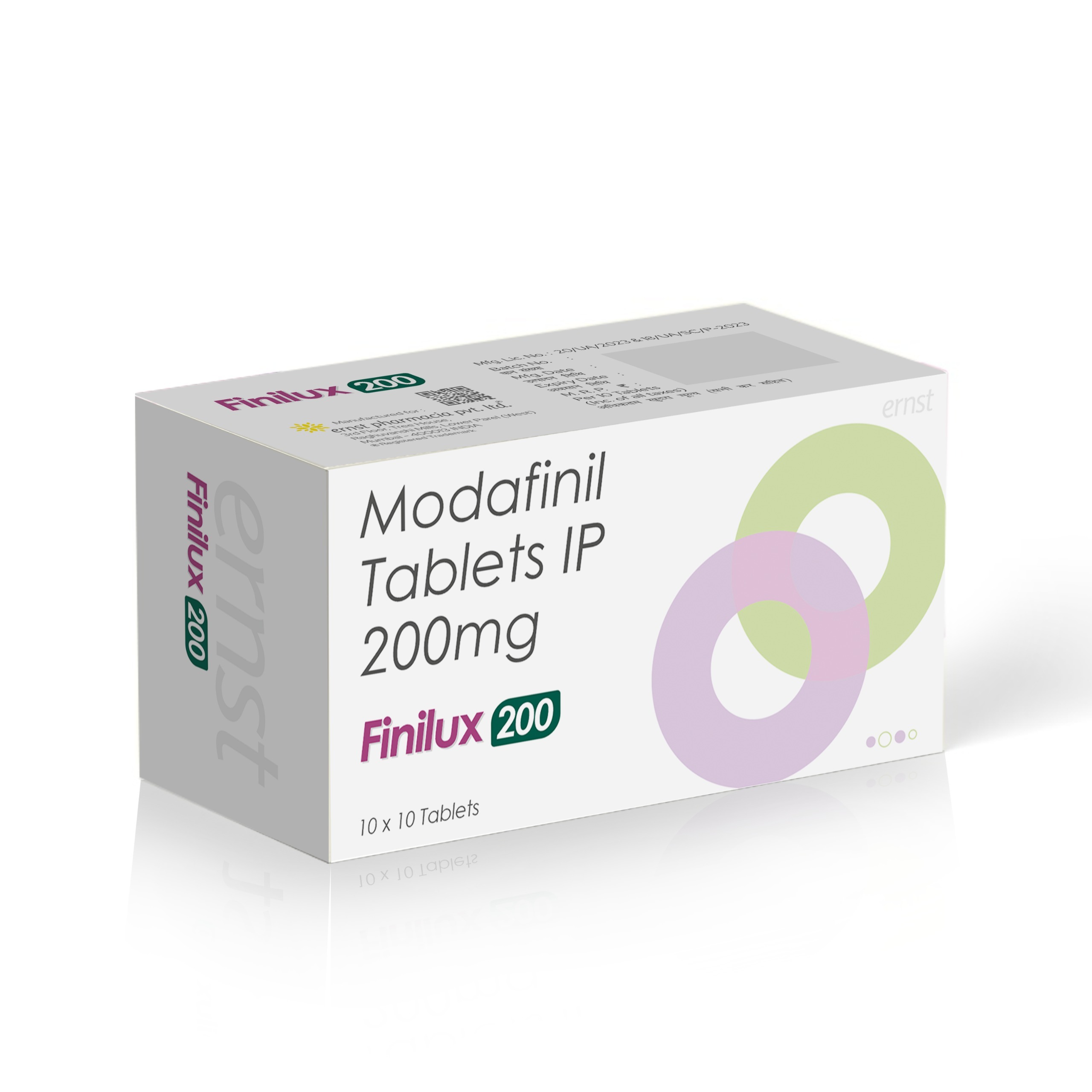
Modafinil Tablets: Uses, Side Effects & Safety
Modafinil tablets are prescription-only medicines used to treat excessive daytime sleepiness associated with narcolepsy in adults. Modafinil promotes wakefulness by acting on pathways in the central nervous system that regulate alertness.
Although modafinil is frequently discussed as a nootropic or cognitive enhancer, improving concentration, memory, or productivity in healthy individuals is not an approved UK indication.
Modafinil also carries important medical risks. These include serious skin reactions, psychiatric symptoms, cardiovascular effects, and interactions with other medicines.
This guide explains what modafinil is, how it works, its available tablet strengths, possible side effects, and the precautions patients should understand.
What Is Modafinil?
Modafinil is a wakefulness-promoting medicine. It is prescribed to adults with narcolepsy, a neurological condition that affects the regulation of sleep and wakefulness.
People with narcolepsy may experience persistent daytime sleepiness, sudden sleep episodes, and difficulty remaining awake during everyday activities.
Modafinil can improve wakefulness in some patients. However, it does not cure narcolepsy or eliminate the need for adequate sleep.
Treatment should begin under the supervision of a clinician experienced in managing sleep disorders.
Modafinil Product Specifications
| Specification | Details |
|---|---|
| Active ingredient | Modafinil |
| Medicine class | Wakefulness-promoting agent |
| Available UK strengths | 100mg and 200mg tablets |
| Pharmaceutical form | Oral tablets |
| Licensed indication | Excessive sleepiness associated with narcolepsy in adults |
| Prescription status | Prescription-only medicine |
| Main risks | Serious skin reactions, psychiatric effects, cardiovascular complications, and medicine interactions |
| Pregnancy | Must not be used during pregnancy |
| Medical supervision | Required |
Important: Manufacturer details, packaging, stock availability, and tablet appearance must be verified for the actual product.
What Are Modafinil Tablets Used For?
Modafinil for Narcolepsy
Narcolepsy is a long-term neurological sleep disorder.
Its symptoms may include:
- Excessive daytime sleepiness
- Sudden episodes of falling asleep
- Difficulty maintaining alertness
- Disrupted sleep patterns
- Cataplexy in some patients
Cataplexy is a sudden loss of muscle tone, often triggered by strong emotions.
In the UK, modafinil is licensed for excessive sleepiness associated with narcolepsy, with or without cataplexy.
However, modafinil is not specifically a treatment for cataplexy itself.
A specialist should evaluate the patient’s symptoms, establish the diagnosis, and regularly review treatment effectiveness.
Modafinil for Excessive Daytime Sleepiness
Excessive daytime sleepiness means having difficulty staying awake during normal waking hours.
It may occur because of narcolepsy, inadequate sleep, sleep apnoea, medication effects, or other medical conditions.
Modafinil is not licensed in the UK for every cause of excessive sleepiness.
Therefore, identifying the underlying condition is essential before treatment.
Is Modafinil Used for Shift Work Sleep Disorder?
Modafinil has different authorised indications in some countries.
However, the UK-approved indication is limited to excessive sleepiness associated with narcolepsy in adults.
Consequently, modafinil should not be advertised as an approved UK treatment for shift work sleep disorder.
Is Modafinil Used for Obstructive Sleep Apnoea?
Obstructive sleep apnoea causes repeated interruptions in breathing during sleep.
It can lead to fatigue, poor concentration, and excessive daytime sleepiness.
Nevertheless, modafinil is not licensed in the UK to treat sleepiness associated with obstructive sleep apnoea.
Patients require appropriate assessment and management of the underlying breathing disorder.
How Does Modafinil Work?
Modafinil acts on several neurotransmitter systems involved in wakefulness.
Research indicates that modafinil inhibits dopamine transporters, influencing dopamine signalling in the brain.
However, scientists have not completely established every aspect of its mechanism.
Its effects differ from those of conventional amphetamine-type stimulants.
Even so, modafinil can cause significant adverse effects and has recognised misuse potential.
Therefore, it should not be regarded as a harmless supplement or ordinary energy booster.
Modafinil 100mg Tablets
Modafinil 100mg tablets contain 100mg of the active ingredient.
This strength is available in UK-authorised pharmaceutical products.
A clinician determines whether a particular tablet strength is appropriate after considering the patient’s diagnosis, medical history, other medicines, and response to treatment.
Patients should never change their prescribed strength independently.
Modafinil 200mg Tablets
Modafinil 200mg tablets contain 200mg of the active ingredient.
This is another UK-authorised strength.
However, a higher tablet strength is not necessarily more suitable for every patient.
The prescriber must assess the potential benefits and risks of treatment.
How Should Modafinil Be Taken?
Modafinil should be taken only as prescribed.
Patients should follow the instructions provided by their clinician and the manufacturer’s patient information leaflet.
General precautions include:
- Use only the prescribed tablet strength.
- Follow the recommended treatment schedule.
- Do not increase the dose independently.
- Inform the prescriber about all other medicines.
- Avoid using modafinil to compensate for inadequate sleep.
- Report significant side effects promptly.
- Attend recommended medical reviews.
The authorised product information states that modafinil tablets should be swallowed whole.
How Long Does Modafinil Take to Work?
Modafinil is absorbed after oral administration and can promote wakefulness during treatment.
However, individual responses vary.
Some patients may continue to experience excessive sleepiness despite taking modafinil.
Therefore, treatment effectiveness should be assessed by a qualified clinician.
Patients should not assume that taking modafinil automatically makes driving or operating machinery safe.
Modafinil and Cognitive Enhancement
Modafinil has attracted attention among people researching nootropics, mental alertness, concentration, and productivity.
However, there is an important distinction between improving wakefulness and enhancing cognitive performance.
A person who is excessively sleepy may find concentration difficult. Improving wakefulness may help that person function more effectively.
Nevertheless, this does not establish that modafinil reliably improves intelligence, learning, or memory in healthy, well-rested individuals.
Furthermore, cognitive-enhancement research does not change the medicine’s approved UK indication.
Modafinil is not licensed in the UK as a general cognitive enhancer or study aid.
For related educational information, see our Armodafinil Cognitive Enhancer Guide.
Modafinil Side Effects
Like all medicines, modafinil can cause unwanted effects.
Some are relatively common, while others are rare but potentially serious.
Common Side Effects
Reported side effects include:
- Headache
- Nausea
- Dizziness
- Insomnia
- Nervousness
- Dry mouth
- Reduced appetite
- Palpitations
- Digestive discomfort
Patients should consult their healthcare professional if symptoms persist, worsen, or interfere with everyday activities.
Serious Skin Reactions
Modafinil has been associated with serious skin reactions.
These include Stevens–Johnson syndrome, toxic epidermal necrolysis, and other severe hypersensitivity reactions.
Warning signs may include:
- A new or spreading rash
- Skin blistering
- Peeling skin
- Mouth ulcers
- Facial swelling
- Fever accompanying a rash
Stop taking modafinil and seek urgent medical advice if a rash develops. Severe blistering, swelling, or breathing difficulties require emergency care.
Psychiatric Side Effects
Modafinil may cause or worsen psychiatric symptoms.
These can include:
- Anxiety
- Agitation
- Depression
- Hallucinations
- Mania
- Suicidal thoughts
- Unusual behavioural changes
Patients should promptly report new or worsening psychiatric symptoms.
Cardiovascular Side Effects
Modafinil may affect heart rate and blood pressure.
Possible cardiovascular problems include palpitations, tachycardia, and other heart-related symptoms.
A healthcare professional should assess cardiovascular risks before treatment and monitor patients when appropriate.
Modafinil Warnings and Precautions
Modafinil is not suitable for everyone.
Patients should inform their clinician about any history of:
- Heart disease
- High blood pressure
- Irregular heartbeat
- Anxiety or psychiatric illness
- Liver disease
- Substance misuse
- Severe allergic reactions
- Pregnancy or plans for pregnancy
Modafinil is contraindicated in patients with uncontrolled moderate to severe hypertension or cardiac arrhythmias.
Modafinil and Pregnancy
Modafinil must not be used during pregnancy.
The MHRA has warned about an increased risk of congenital malformations following exposure during pregnancy.
Patients who are pregnant, planning pregnancy, or concerned about possible exposure should contact their healthcare professional.
Modafinil and Hormonal Contraception
Modafinil can reduce the effectiveness of hormonal contraceptives.
This interaction may affect contraception methods such as certain oral contraceptive pills.
Patients who could become pregnant should obtain professional advice about effective alternative or additional contraception.
The UK product information recommends maintaining appropriate contraception during treatment and for two months after stopping modafinil.
Modafinil and Breastfeeding
Modafinil should not be used during breastfeeding.
Patients should discuss suitable alternatives with their healthcare professional.
Modafinil and Liver Disease
Severe liver impairment can affect how the body processes modafinil.
Therefore, patients with liver disease require individual medical assessment.
Modafinil and Driving
Modafinil does not guarantee normal alertness.
Patients with narcolepsy may continue to experience sleepiness despite treatment.
In addition, dizziness, blurred vision, and other adverse effects can impair driving ability.
Patients should follow their clinician’s advice and must not drive when sleepy or otherwise impaired.
Modafinil Drug Interactions
Modafinil can affect how other medicines work.
Potentially important interactions include:
- Hormonal contraceptives
- Certain antidepressants
- Some anti-epileptic medicines
- Warfarin
- Diazepam
- Certain medicines used after organ transplantation
These interactions may alter medicine effectiveness or increase adverse effects.
Therefore, patients should provide their prescriber or pharmacist with a complete list of prescription medicines, over-the-counter products, and supplements.
Can Modafinil Cause Dependence?
Modafinil has recognised misuse and dependence potential.
Although its pharmacological profile differs from that of opioids and benzodiazepines, inappropriate use can still cause harm.
The possibility of dependence during prolonged treatment cannot be entirely excluded.
Patients should use modafinil only under medical supervision and discuss treatment changes with their prescriber.
Modafinil vs Armodafinil
Modafinil and armodafinil are closely related wakefulness-promoting medicines.
However, they differ in molecular composition.
| Feature | Modafinil | Armodafinil |
|---|---|---|
| Molecular composition | R- and S-enantiomers | R-enantiomer |
| Main pharmacological effect | Promotes wakefulness | Promotes wakefulness |
| UK-authorised product | Yes | No UK-authorised product identified |
| UK licensed indication | Narcolepsy-related excessive sleepiness in adults | No UK-approved indication identified |
| Approved as a general cognitive enhancer | No | No |
These medicines should not be substituted for one another without appropriate medical advice.
Read our Armodafinil Tablets Information for more information.
Frequently Asked Questions About Modafinil
What are modafinil tablets used for?
In the UK, modafinil is licensed to treat excessive daytime sleepiness associated with narcolepsy in adults.
Is modafinil a prescription medicine?
Yes. Modafinil is a prescription-only medicine in the UK.
What strengths are available in the UK?
UK-authorised modafinil tablets include 100mg and 200mg strengths.
Does modafinil improve concentration?
Modafinil promotes wakefulness, which may help some patients affected by excessive sleepiness. However, it is not licensed to improve concentration in healthy individuals.
Is modafinil a nootropic?
Modafinil is frequently discussed in nootropics research. Pharmacologically, however, it is a wakefulness-promoting medicine.
Can modafinil improve memory?
Research into cognitive performance has produced mixed results. Modafinil is not approved in the UK as a memory-enhancement medicine.
Does modafinil cause insomnia?
Yes. Insomnia is a recognised side effect.
Can modafinil replace normal sleep?
No. Modafinil does not remove the body’s need for adequate sleep.
Can modafinil affect blood pressure?
Yes. It may affect blood pressure and heart rate.
Can modafinil affect contraception?
Yes. It can reduce the effectiveness of certain hormonal contraceptives.
Is modafinil safe during pregnancy?
No. Modafinil must not be used during pregnancy because of potential risks to the developing baby.
Is modafinil the same as armodafinil?
No. Armodafinil contains the R-enantiomer of modafinil, while modafinil contains both R- and S-enantiomers.
Can modafinil cause dependence?
Yes. Modafinil has recognised misuse and dependence potential.
Can modafinil treat insomnia?
No. Modafinil promotes wakefulness and may worsen insomnia.
Related Articles and Product Information
Explore additional resources on Affordable Tablets UK:
- Armodafinil Cognitive Enhancer Guide — Research into wakefulness, alertness, and cognitive performance.
- Armodafinil Tablets — Information about a related wakefulness-promoting substance.
- Sleep Aid Tablets — Educational information about sleep-related medicines.
- Affordable Tablets UK Homepage — Explore the website’s medicine information and health resources.
Official Medical References
- Modafinil 200mg — UK Summary of Product Characteristics
- Modafinil 200mg — Patient Information Leaflet
- Electronic Medicines Compendium — Modafinil Products
- MHRA — Modafinil, Pregnancy Risks, and Contraception
Conclusion
Modafinil tablets are prescription-only medicines used to improve wakefulness in adults with narcolepsy.
Although modafinil is frequently discussed in connection with nootropics and cognitive enhancement, these discussions should not be confused with its licensed medical purpose.
Modafinil also carries significant safety considerations, including serious skin reactions, psychiatric symptoms, cardiovascular effects, and pregnancy-related risks.
Therefore, treatment requires specialist assessment, an appropriate prescription, and ongoing medical review.
Medical disclaimer: This content provides general educational information and does not replace individual medical advice, diagnosis, or treatment.



Reviews
There are no reviews yet.