
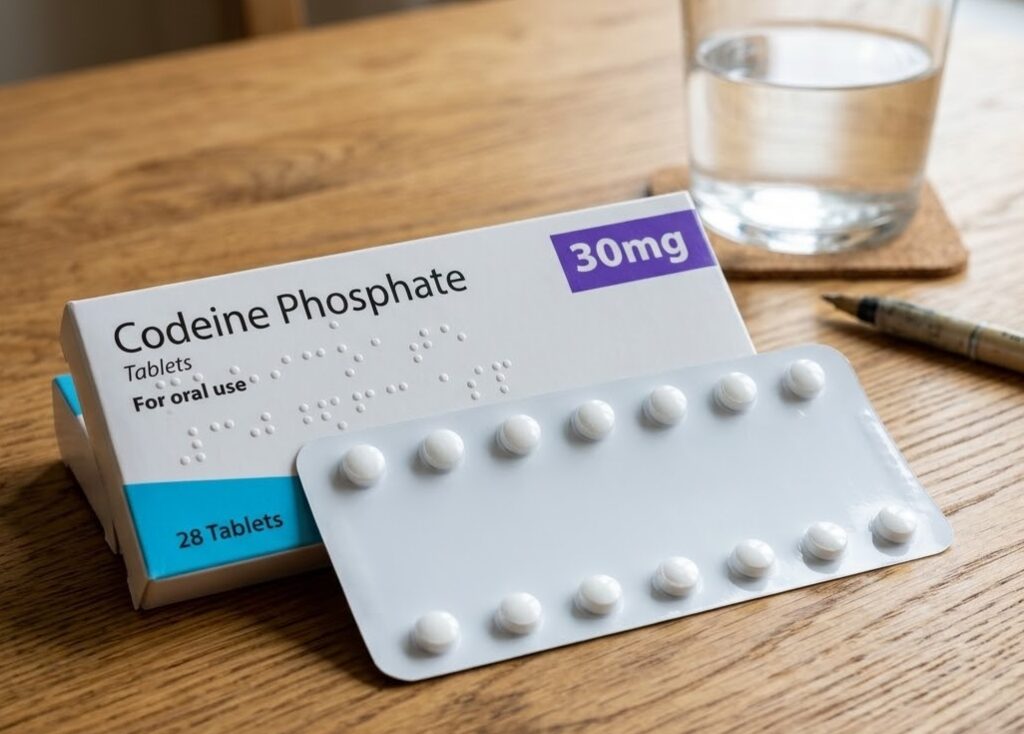
Codeine Phosphate UK: Uses and Side Effects
Codeine phosphate is an opioid medicine used in the UK for the treatment of certain types of pain. It is particularly associated with pain that has not been adequately relieved by simpler painkillers such as paracetamol or ibuprofen.
People searching for Codeine Phosphate UK often ask about Codeine Phosphate 30mg tablets, what the medicine is used for, how it works, possible side effects, and whether codeine phosphate is the same as ordinary codeine.
Codeine requires particular care because it can cause drowsiness, constipation, breathing problems, dependence, and withdrawal. Standalone codeine is also a prescription-only medicine in the UK.
This guide explains the medicine from a UK perspective.
What Is Codeine Phosphate?
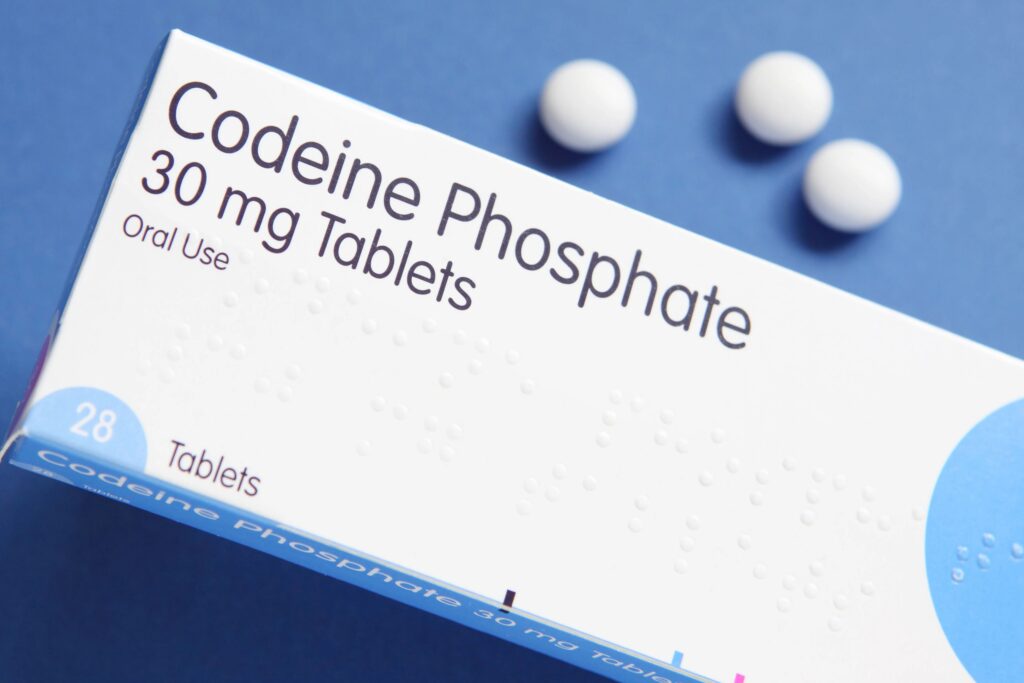
Codeine phosphate is a pharmaceutical salt of codeine, an opioid medicine.
When a medicine is labelled Codeine Phosphate 30mg, the active medicine is codeine supplied as its phosphate salt.
Codeine acts on the central nervous system and is partly converted by the body into morphine. Its analgesic effects are therefore associated with opioid receptors involved in pain signalling.
In the UK, codeine phosphate tablets are prescription-only medicines.
What Is Codeine Phosphate Used For?
One of the principal uses of codeine phosphate is pain relief.
Current UK product information for Codeine Phosphate 30mg states that codeine may be used in people over 12 for acute moderate pain that is not considered to be adequately relieved by analgesics such as paracetamol or ibuprofen alone.
Depending on the particular licensed formulation, codeine has also been used for certain coughs and symptomatic treatment of chronic diarrhoea.
For most people searching for Codeine Phosphate tablets UK, however, pain relief is likely to be the most relevant use.
Codeine Phosphate for Pain
Codeine belongs to the opioid family of pain medicines.
NHS information describes codeine as an opioid used for pain, including pain following an injury or operation, and notes that it is often considered when painkillers such as paracetamol and ibuprofen have not worked adequately. nhs.uk
This does not mean codeine is suitable for every type of pain.
Pain can have many causes, including:
- Injury
- Surgery
- Inflammation
- Musculoskeletal conditions
- Nerve damage
- Chronic medical conditions
Different causes of pain can respond differently to treatment.
For that reason, choosing pain medication should not simply involve selecting what appears to be the “strongest” tablet.

What Is Codeine Phosphate 30mg?
Codeine Phosphate 30mg is a commonly encountered prescription strength.
A current UK authorised product contains 30mg of codeine phosphate per tablet and is classified as prescription-only.
Other UK patient information also identifies 15mg, 30mg, and 60mg Codeine Phosphate tablets.
Different strengths should not be self-selected according to how severe someone believes their pain to be. The appropriate medicine, strength, treatment duration, and dosing instructions should be determined according to the prescription and individual clinical circumstances.
How Does Codeine Phosphate Work?
Codeine is a centrally acting opioid analgesic.
One of the important features of codeine is that part of it is metabolised into morphine in the body.
Morphine acts on opioid receptors involved in pain signalling. UK prescribing information explains that codeine itself has relatively low affinity for these receptors and that much of its analgesic effect comes from conversion to morphine.
Individual responses to codeine can differ partly because people metabolise the medicine differently.

Is Codeine Phosphate an Opioid?
Yes.
Codeine is an opioid.
This distinction matters because opioids have safety considerations that do not apply in the same way to ordinary non-opioid painkillers.
These include the potential for:
- Drowsiness
- Respiratory depression
- Tolerance
- Physical dependence
- Withdrawal
- Addiction
The patient information for Codeine Phosphate specifically warns that codeine is an opioid capable of causing addiction.
Codeine vs Codeine Phosphate: What's the Difference?
The terms are closely related.
- Codeine refers to the active opioid drug.
- Codeine phosphate is a salt form used in pharmaceutical preparations.
Therefore, seeing “Codeine Phosphate 30mg Tablets” on a medicine pack does not mean it is an entirely different painkiller from codeine.
For everyday patient information, the terms are frequently discussed together.
Codeine Phosphate vs Co-Codamol
This distinction is more significant.
Codeine Phosphate tablets contain codeine phosphate as the active opioid ingredient.
Co-codamol combines:
Codeine phosphate + paracetamol
For example, a UK Co-Codamol 30/500 tablet contains 30mg codeine phosphate and 500mg paracetamol.
This means Codeine Phosphate 30mg and Co-Codamol 30/500 should not be treated as identical medicines.
It is also important because taking multiple products containing codeine or paracetamol without recognising their ingredients can increase the risk of adverse effects or overdose.

Is Codeine Phosphate Prescription-Only in the UK?
Standalone Codeine Phosphate tablets are prescription-only medicines in the UK.
Codeine is also controlled under UK drug legislation. The Home Office currently lists codeine as Class B, with Schedule 2/5 status depending on the preparation and applicable exemptions.
This is why standalone Codeine Phosphate should not be confused with certain lower-strength combination products that can have different pharmacy supply arrangements.
Common Codeine Phosphate Side Effects
Like all medicines, codeine can cause unwanted effects.
NHS guidance identifies common effects including:
- Constipation
- Nausea
- Vomiting
- Sleepiness or tiredness
- Sweating
Not everybody experiences the same side effects.
Someone experiencing persistent or troublesome effects should discuss them with a pharmacist, doctor, or other appropriate healthcare professional.
Can Codeine Phosphate Make You Sleepy?
Yes.
Sleepiness and tiredness are recognised effects of codeine.
This can affect activities requiring concentration and coordination.
If codeine makes you sleepy or tired, NHS guidance advises against driving, cycling, or operating machinery until those effects have passed.
Serious Codeine Side Effects
Although less common, serious reactions can occur.
NHS information identifies potentially serious effects, including:
- Slow, weak, or shallow breathing
- Severe allergic reactions
- Abnormal heartbeat
- Significantly low blood pressure
Breathing problems are particularly important because opioids can depress the central nervous system.
Urgent medical help should be sought when serious symptoms occur.
Codeine Phosphate and Breathing Problems
Opioids can suppress respiratory activity.
The risk becomes particularly important when codeine is combined with other medicines that also depress the central nervous system.
Current UK prescribing information warns that combining opioids with sedating medicines such as benzodiazepines can increase the risk of sedation, respiratory depression, coma, and death.
This is particularly relevant for people who take several prescription medicines.
Alprazolam and Other Sedating Medicines
Extra caution is necessary when benzodiazepines are combined with other medicines that depress the central nervous system.
NICE specifically identifies taking an opioid together with a benzodiazepine as a factor that can increase the risk of problems associated with dependence-forming medicines.
This is particularly relevant for your website because your Pain Relief category contains information about opioid medicines.
Patients should ensure their healthcare professional knows about all medicines they are taking rather than combining sedating medicines independently.
Codeine Phosphate and Gabapentin or Pregabalin
People using gabapentin or pregabalin should make sure their prescriber knows if codeine is also being considered.
Current UK Codeine Phosphate prescribing information warns that combining codeine with gabapentinoids such as gabapentin or pregabalin may increase risks, including profound sedation and respiratory depression.
This is an important consideration for anyone being treated simultaneously for different types of pain.

Codeine Phosphate and Alcohol
Alcohol can increase some of codeine’s central nervous system effects.
NHS guidance advises that it is best not to drink alcohol while taking codeine because doing so can increase the risk of side effects.
People should follow the instructions provided with their medicine and advice from their prescriber.
Can Codeine Phosphate Cause Dependence?
Yes.
Regular opioid use can lead to physical dependence, and codeine also carries an addiction risk.
Current Codeine Phosphate prescribing information says that a treatment strategy, including treatment duration, goals, and a plan for ending treatment, should be discussed when opioid treatment begins.
Physical dependence and addiction are related concepts, but they are not identical.
Physical dependence means the body has adapted to the medicine and may produce withdrawal symptoms when treatment is reduced or stopped.
Addiction involves behavioural features such as impaired control over medicine use despite harmful consequences.
Codeine Phosphate Withdrawal
Withdrawal symptoms may occur after regular codeine use if treatment is suddenly stopped.
For people who no longer require ongoing treatment, UK prescribing information notes that gradual reduction may sometimes be appropriate to help prevent withdrawal symptoms.
Someone who has been using codeine regularly should therefore not independently make major changes to treatment without appropriate medical advice.
Can Codeine Phosphate Be Used Long Term?
The duration depends on why codeine has been prescribed and the individual’s circumstances.
However, opioid treatment should not simply continue indefinitely without review.
UK prescribing information emphasises treatment goals, duration, regular reassessment, and planning for discontinuation.
Longer exposure can increase concerns involving:
- Dependence
- Tolerance
- Withdrawal
- Constipation
- Sedation
- Opioid-related adverse effects
The appropriate treatment duration should therefore be determined by the prescribing healthcare professional.
Who Should Take Extra Care With Codeine?
Codeine is not suitable for everyone.
Extra assessment may be necessary for people with certain:
- Breathing or lung problems
- Liver conditions
- Kidney conditions
- Previous reactions to opioids
- Other medicines causing sedation
NHS guidance specifically notes that codeine may not be suitable for some people with conditions such as asthma or liver or kidney problems.
A healthcare professional should be given an accurate list of medicines, supplements, and relevant health conditions.
Frequently Asked Questions
What is Codeine Phosphate used for?
Codeine phosphate is an opioid medicine used for pain. UK product information also includes certain other indications depending on the particular formulation.
Is Codeine Phosphate 30mg a painkiller?
Yes. Codeine phosphate is an opioid analgesic, and 30mg tablets are available as prescription-only medicines in the UK.
Is Codeine Phosphate the same as codeine?
Codeine phosphate is a pharmaceutical salt form of codeine. The active opioid effect comes from codeine.
Is Codeine Phosphate an opioid?
Yes. Codeine is an opioid medicine.
Is Codeine Phosphate available without prescription in the UK?
Standalone Codeine Phosphate tablets are prescription-only medicines in the UK.
What is the difference between Codeine Phosphate and Co-Codamol?
Codeine Phosphate tablets contain codeine, whereas co-codamol combines codeine phosphate with paracetamol. A 30/500 co-codamol tablet, for example, contains 30mg codeine phosphate plus 500mg paracetamol.
What are common Codeine Phosphate side effects?
Constipation, nausea, vomiting, tiredness, sleepiness, and sweating are among the commonly reported effects of codeine.
Can Codeine Phosphate cause addiction?
Yes. Codeine is an opioid and can cause addiction. Physical dependence and withdrawal can also develop with regular use.
Can Codeine Phosphate be taken with alcohol?
Alcohol can increase codeine-related side effects and sedation. NHS guidance advises that it is best to avoid alcohol while taking codeine.
Can Codeine Phosphate be taken with Co-Codamol?
This should not be done without professional advice because co-codamol already contains codeine phosphate as well as paracetamol.
Codeine Phosphate UK: Final Thoughts
Codeine Phosphate UK is an important search topic because codeine is widely used in pain management but carries substantially different considerations from ordinary non-opioid painkillers.
Codeine phosphate is an opioid. Standalone Codeine Phosphate tablets are prescription-only in the UK, and products such as Codeine Phosphate 30mg are used for pain when appropriate after clinical assessment.
The medicine can cause constipation, nausea, drowsiness, and other side effects. More serious risks include respiratory depression, while regular use can result in dependence, withdrawal, and addiction.
For these reasons, Codeine Phosphate should be used according to the prescribed treatment plan rather than selected, increased, combined, or discontinued independently.
For further information about pain management, explore our guides covering Codeine Tablets, Co-Codamol, Painkillers UK, Gabapentin for Nerve Pain, and Pregabalin for Nerve Pain.