
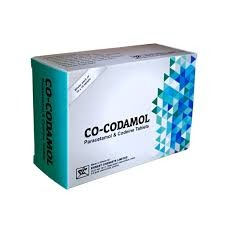
Co-Codamol Tablets: Uses & Safety
Co-codamol tablets contain two pain-relieving ingredients: codeine phosphate and paracetamol. Healthcare professionals use this combination for the short-term treatment of certain types of moderate pain when simpler painkillers have not provided sufficient relief.
Codeine belongs to the opioid family. Paracetamol is a non-opioid painkiller that also helps reduce fever.
Although co-codamol may relieve pain, it carries important risks. These include constipation, drowsiness, dependence, breathing problems, and liver damage from excessive paracetamol.
This guide explains co-codamol strengths, uses, side effects, and UK safety requirements.
What Are Co-Codamol Tablets?
Co-codamol combines codeine and paracetamol in one medicine.
The two ingredients work differently. Together, they may provide pain relief when paracetamol or ibuprofen alone is insufficient.
However, co-codamol is not appropriate for every type of pain. It is generally intended for short-term treatment rather than routine long-term use.
Explore our Painkillers category for information about other pain medicines.
Co-Codamol Product Specifications
| Feature | Information |
|---|---|
| Active ingredients | Codeine phosphate and paracetamol |
| Medicine class | Opioid combination analgesic |
| Common strengths | 8/500mg, 15/500mg, and 30/500mg |
| Form | Oral tablets; other formulations also exist |
| Main use | Short-term relief of certain moderate pain |
| 8/500mg UK status | Pharmacy-only or prescription-only, depending on product |
| 15/500mg and 30/500mg UK status | Prescription-only |
| Dependence potential | Yes, due to codeine |
| Important risks | Sedation, respiratory depression, addiction, and liver damage |
The actual formulation, packaging, and ingredients depend on the manufacturer.
What Is Co-Codamol Used For?
Co-codamol may be suitable for short-term treatment of certain painful conditions when simpler analgesics have not provided adequate relief.
Co-Codamol for Toothache
Toothache can result from infection, inflammation, or dental injury.
Co-codamol may provide temporary pain relief in selected circumstances. However, it does not treat the underlying dental problem.
Therefore, persistent or severe toothache requires dental assessment.
Co-Codamol for Headaches
Some co-codamol products are indicated for short-term relief of certain headaches.
However, frequent use of opioid-containing painkillers can contribute to medication-overuse headaches.
For this reason, patients should not rely on co-codamol for recurring headaches without medical advice.
Co-Codamol for Period Pain
Some lower-strength products include period pain among their indications.
However, treatment should reflect the person’s symptoms and medical circumstances.
A pharmacist or prescriber can advise whether co-codamol is appropriate.
Co-Codamol for Other Acute Pain
Healthcare professionals may prescribe co-codamol for selected episodes of acute pain.
However, stronger formulations require a valid prescription and an individual assessment.
How Does Co-Codamol Work?
Co-codamol contains two active ingredients.
Codeine Phosphate
Codeine is an opioid medicine.
The body converts some codeine into morphine through an enzyme called CYP2D6. This contributes to its pain-relieving effects.
However, the rate of conversion varies between individuals.
Consequently, some people experience limited benefit, while others face an increased risk of serious opioid toxicity.
Paracetamol
Paracetamol helps reduce pain and fever.
Its action differs from that of codeine.
However, taking excessive paracetamol can cause serious liver damage, even when symptoms are not immediately apparent.
Co-Codamol 8/500mg, 15/500mg, and 30/500mg
Co-codamol strengths are expressed as two numbers.
The first number represents the amount of codeine. The second represents the amount of paracetamol.
Co-Codamol 8/500mg
Each tablet contains:
- Codeine phosphate: 8mg
- Paracetamol: 500mg
Certain 8/500mg products are available through pharmacies without a prescription following pharmacist assessment.
However, they are not general-sale medicines.
Co-Codamol 15/500mg
Each tablet contains:
- Codeine phosphate: 15mg
- Paracetamol: 500mg
This strength requires a prescription in the UK.
Co-Codamol 30/500mg
Each tablet contains:
- Codeine phosphate: 30mg
- Paracetamol: 500mg
This is a prescription-only strength.
Although it contains more codeine, it is not automatically suitable for every patient.
Only use the formulation and strength recommended by a qualified healthcare professional.
How Should Co-Codamol Be Taken?
Patients should follow the instructions on their prescribed medicine or pharmacy-supplied product.
Important precautions include:
- Do not exceed the stated dose.
- Do not combine co-codamol with other paracetamol-containing medicines.
- Avoid alcohol during treatment.
- Tell your healthcare professional about other medicines.
- Do not share prescription co-codamol.
- Do not use it longer than recommended.
Pharmacy-supplied co-codamol is intended for short-term use. Patients should not continue taking it for more than three days without medical advice.
Prescription products must be used according to the prescriber’s instructions.
Possible Side Effects of Co-Codamol
Like other medicines, co-codamol can cause adverse effects.
Common Side Effects
These may include:
- Constipation
- Nausea
- Vomiting
- Drowsiness
- Dizziness
Some people experience stronger effects than others.
Serious Side Effects
More serious problems may include:
- Slow or difficult breathing
- Severe sedation
- Serious allergic reactions
- Liver damage
- Dependence and addiction
- Opioid overdose
Seek emergency medical assistance if someone has serious breathing difficulties, becomes unconscious, or cannot be awakened.
Co-Codamol and Paracetamol Overdose
Every standard co-codamol tablet contains 500mg of paracetamol.
Therefore, taking additional paracetamol products can cause an accidental overdose.
Excessive paracetamol may seriously damage the liver.
If an overdose is suspected, seek emergency medical advice immediately, even if the person feels well.
Early symptoms may be mild or absent despite significant liver injury.
Co-Codamol Warnings and Precautions
Co-codamol is not suitable for everyone.
Patients should tell their pharmacist or prescriber about:
- Liver disease
- Kidney disease
- Breathing disorders
- Sleep apnoea
- A history of opioid misuse
- Other sedating medicines
- Pregnancy or breastfeeding
Codeine-containing medicines also have important restrictions for children and adolescents.
In particular, codeine must not be used in children under 12. Additional restrictions apply to certain adolescents with breathing problems and those recovering from tonsil or adenoid surgery for obstructive sleep apnoea.
Codeine is also contraindicated during breastfeeding.
Co-Codamol and Alcohol
Alcohol can increase codeine-related sedation.
Consequently, combining the two can impair alertness and increase the risk of dangerous breathing problems.
Avoid alcohol while taking co-codamol.
Co-Codamol and Other Medicines
Codeine can interact with medicines that suppress the central nervous system.
These include benzodiazepines, sleeping medicines, other opioids, and certain sedating antihistamines.
Combining these medicines may increase the risk of severe sedation, respiratory depression, coma, or death.
Therefore, patients should disclose all medicines and supplements to their healthcare professional.
Co-Codamol and Driving
Codeine may cause drowsiness, dizziness, and impaired concentration.
Patients should not drive or operate machinery if affected.
Can Co-Codamol Cause Dependence?
Yes. Co-codamol contains codeine, which can cause tolerance, physical dependence, and addiction.
Repeated use may also lead to withdrawal symptoms when treatment stops.
These can include:
- Restlessness
- Anxiety
- Difficulty sleeping
- Sweating
- Nausea
- Diarrhoea
- Muscle discomfort
People taking prescribed co-codamol regularly should discuss discontinuation with their prescriber.
Co-Codamol vs Codeine
Co-codamol and codeine are related, but they are not identical products.
| Feature | Co-Codamol | Codeine |
|---|---|---|
| Active ingredients | Codeine and paracetamol | Codeine |
| Contains an opioid | Yes | Yes |
| Contains paracetamol | Yes | No |
| Dependence risk | Yes | Yes |
| Main safety concerns | Opioid effects and paracetamol toxicity | Opioid effects |
| Prescription requirements | Depend on strength and product | Depend on formulation and indication |
Patients should not substitute one medicine for another without professional advice.
Read our Codeine Painkiller Tablets Guide for more information.
Frequently Asked Questions About Co-Codamol
What are co-codamol tablets used for?
Co-codamol is used for short-term relief of certain types of moderate pain when simpler painkillers have not provided adequate relief.
What ingredients does co-codamol contain?
Co-codamol contains codeine phosphate and paracetamol.
Is co-codamol available without a prescription?
Certain 8/500mg products are available from pharmacies following pharmacist assessment. The 15/500mg and 30/500mg strengths require a prescription.
Is co-codamol stronger than paracetamol?
Co-codamol contains an additional opioid ingredient. However, the clinical benefit and risks depend on the individual and the type of pain.
Can co-codamol cause constipation?
Yes. Constipation is a common side effect of codeine.
Can co-codamol cause drowsiness?
Yes. Codeine can cause sedation and impaired alertness.
Can co-codamol be taken with other paracetamol products?
No. Combining them can result in excessive paracetamol intake and serious liver damage.
Can co-codamol cause addiction?
Yes. Repeated use can lead to dependence and addiction.
Can co-codamol be taken with alcohol?
Alcohol can increase sedation and the risk of serious adverse effects. It should be avoided.
How long can pharmacy co-codamol be used?
Pharmacy-supplied co-codamol should not be used for more than three days without medical advice.
Is co-codamol suitable for long-term pain?
It is generally intended for short-term treatment. Long-term use requires careful medical assessment and monitoring.
Related Medicines and Categories
Explore additional educational resources from Affordable Tablets UK:
- Codeine Painkiller Tablets — Information about codeine and opioid precautions.
- Amitriptyline Tablets — A medicine used for certain types of nerve pain.
- Pregabalin for Nerve Pain — Neuropathic pain treatment information.
- Gabapentin — Another prescription medicine for nerve pain.
- Painkillers Category — Browse pain medicine information.
- Affordable Tablets UK Homepage — Explore our health information resources.
Official Medical References
- NHS — Co-Codamol for Adults
- NHS — How and When to Take Co-Codamol
- UK Co-Codamol 8/500mg Product Information
- UK Co-Codamol 30/500mg Product Information
Conclusion
Co-codamol tablets combine codeine and paracetamol for the short-term treatment of certain painful conditions.
Although the medicine may relieve pain, it carries important risks.
These include drowsiness, constipation, dependence, respiratory depression, and liver damage from excessive paracetamol.
Therefore, patients should follow pharmacy or prescription instructions and seek medical advice if pain persists.
Medical disclaimer: This information is educational and does not replace advice from a qualified healthcare professional.
Reviews
There are no reviews yet.